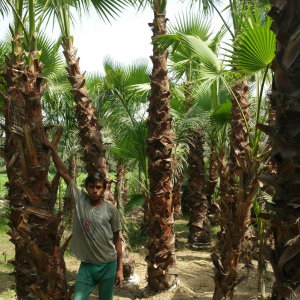
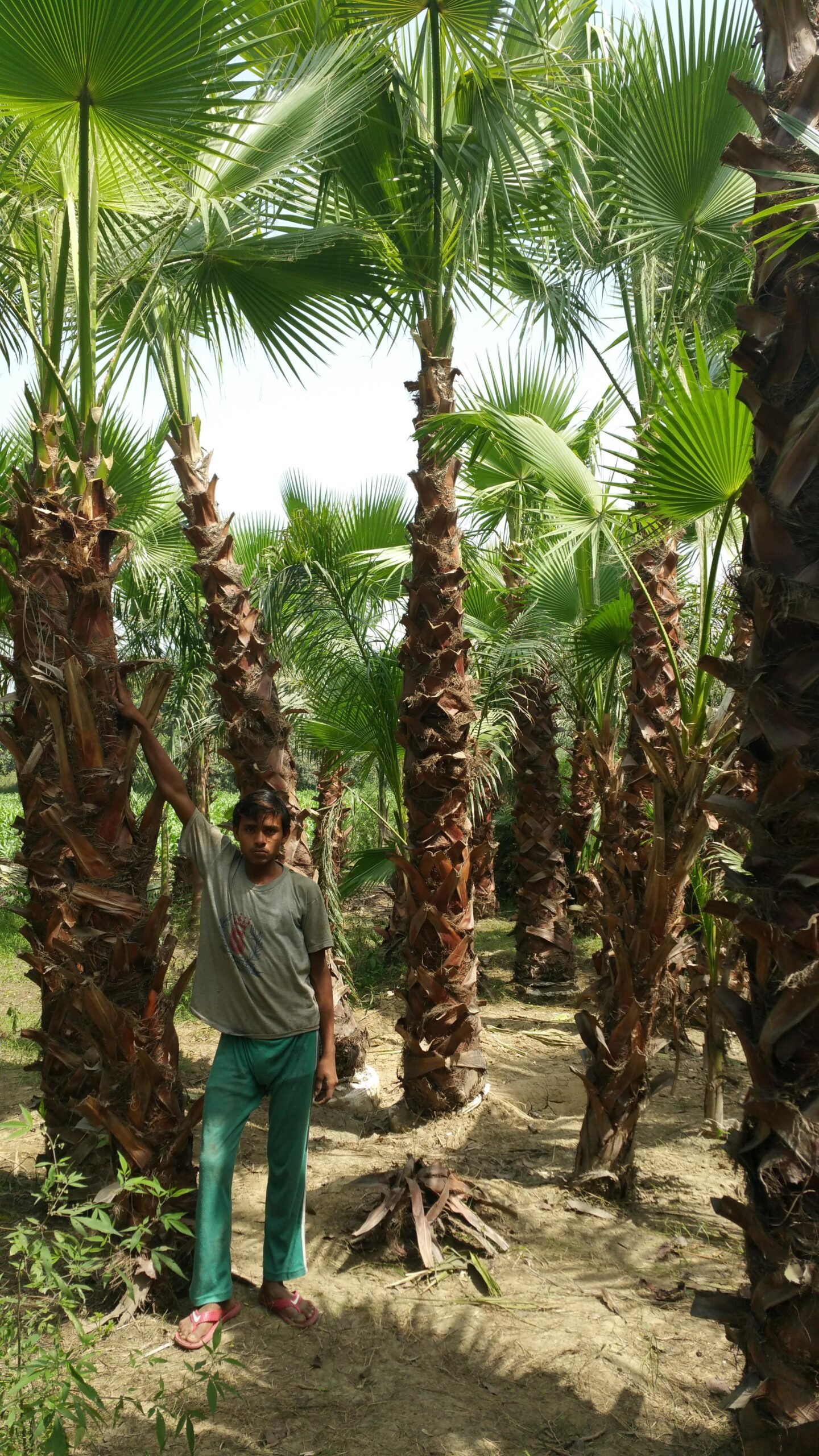
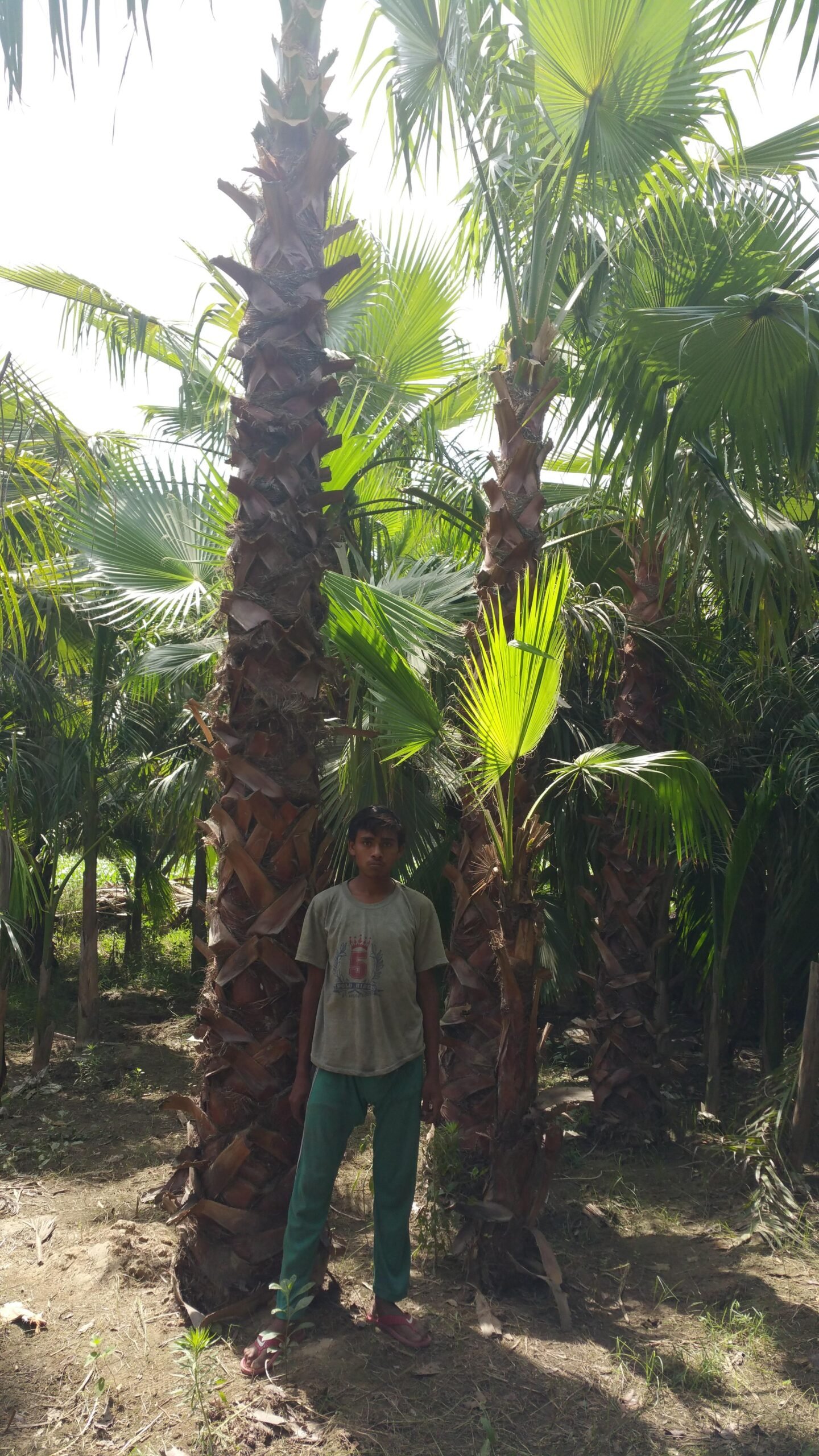
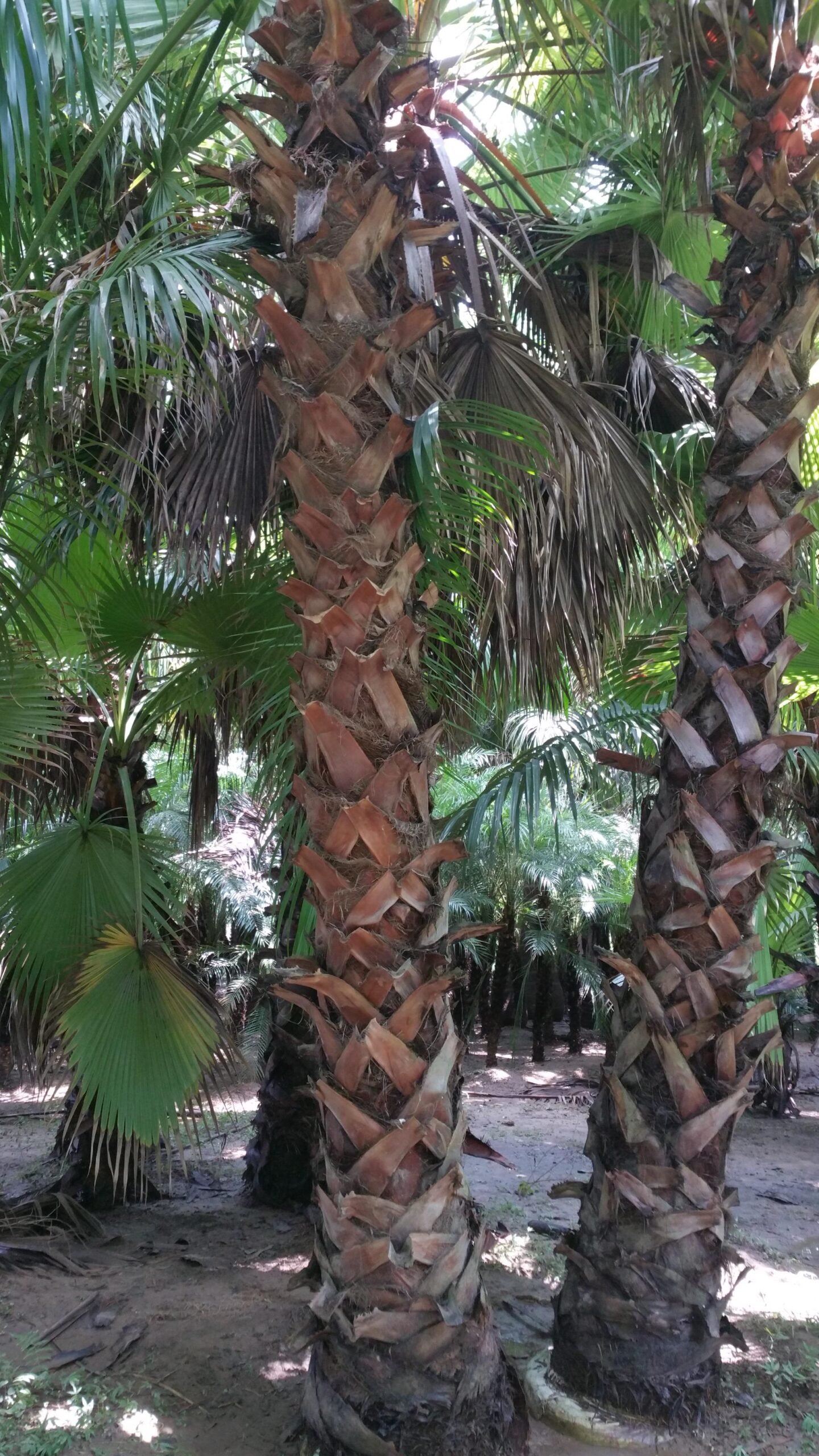
About Washingtonia robustaCommon Name: Mexican Fan PalmFamily: Arecaceae (Palm family)Scientific Name: Washingtonia robustaNative Region: Northwestern Mexico (Baja California and Sonora)Type: Tall, fast-growing ornamental palmKey FeaturesSize:Height: 20–30 meters (65–100 feet), sometimes taller.Trunk: Slender (30–45 cm in diameter), slightly swollen at the base, covered with old leaf bases forming a “skirt.”Leaves:Fan-shaped (palmate), about 1–1.5 meters wide.Glossy green, with long, spiny petioles.Old leaves often droop and create a dense thatch skirt if not pruned.Flowers:Small, white-cream flowers.Grow in large clusters up to 3 meters long, blooming in spring to early summer.Fruits:Small, black drupes (about 6–8 mm), known as “palm dates.”Edible but not widely consumed; sometimes eaten by birds and wildlife. Compare Quick view Add to wishlist Washingtonia Robusta Washingtonia Robusta Read more ENQUIRY! Growth and CultivationSoil: Adapts to a wide range of soils; prefers well-drained sandy or loamy soil.Sunlight: Requires full sun.Water: Drought-tolerant but grows best with occasional deep watering.Climate:Thrives in warm, arid, or semi-arid climates.Hardy to about -6°C (20°F).Growth Rate: Very fast-growing; one of the tallest ornamental palms in landscaping.Ecological and Cultural ImportanceOrnamental Value:Widely planted along streets, parks, and resorts, especially in California, Florida, and Mediterranean regions.Known for its iconic “skyline” look in Los Angeles and other cities.Wildlife: Fruits attract birds and small animals.Cultural Note: Sometimes called “petticoat palm” due to its hanging dead leaves if not pruned.