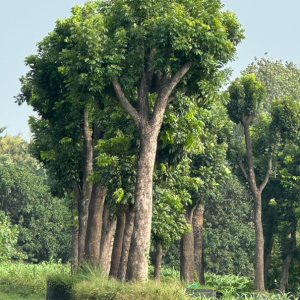
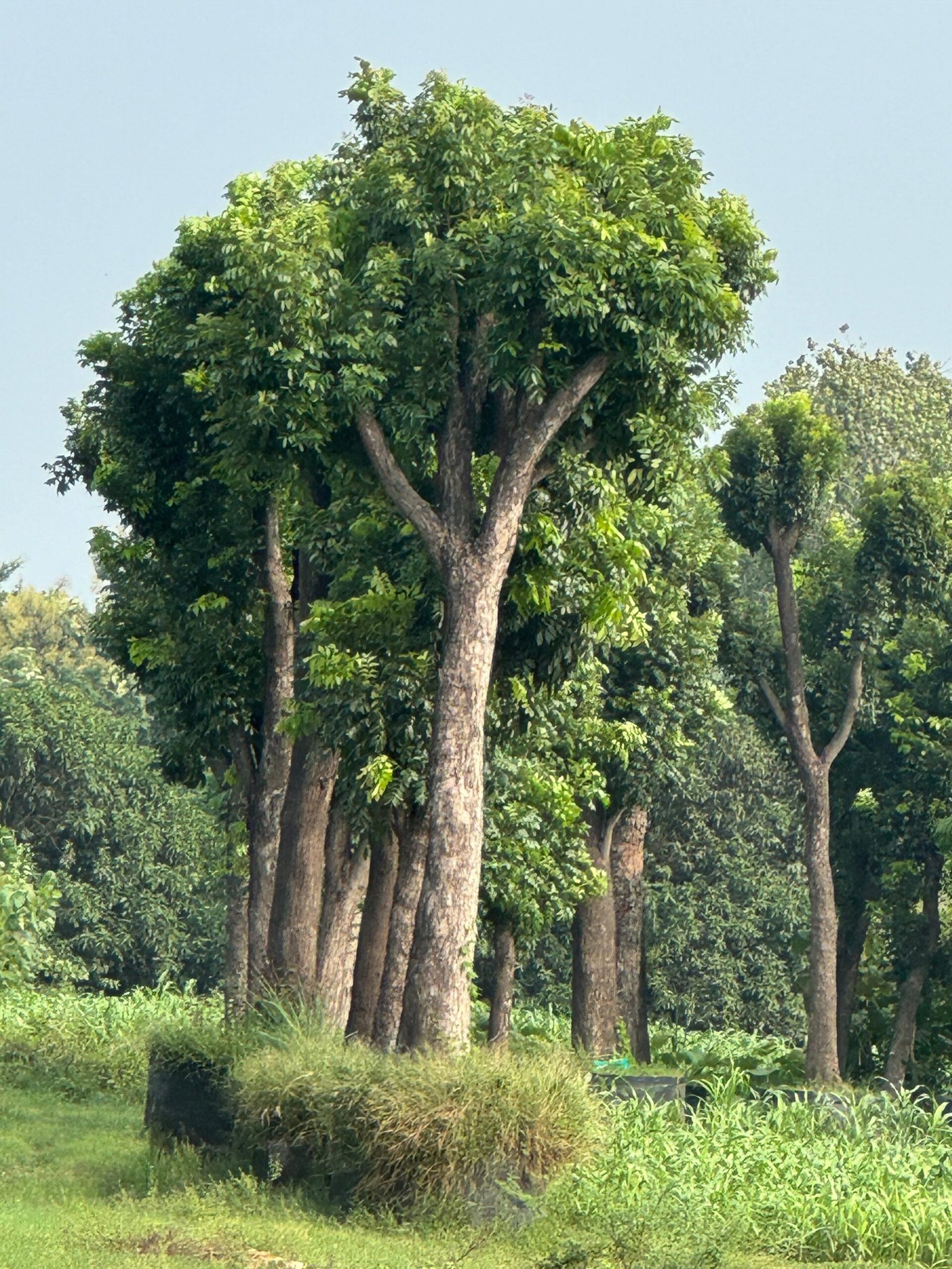
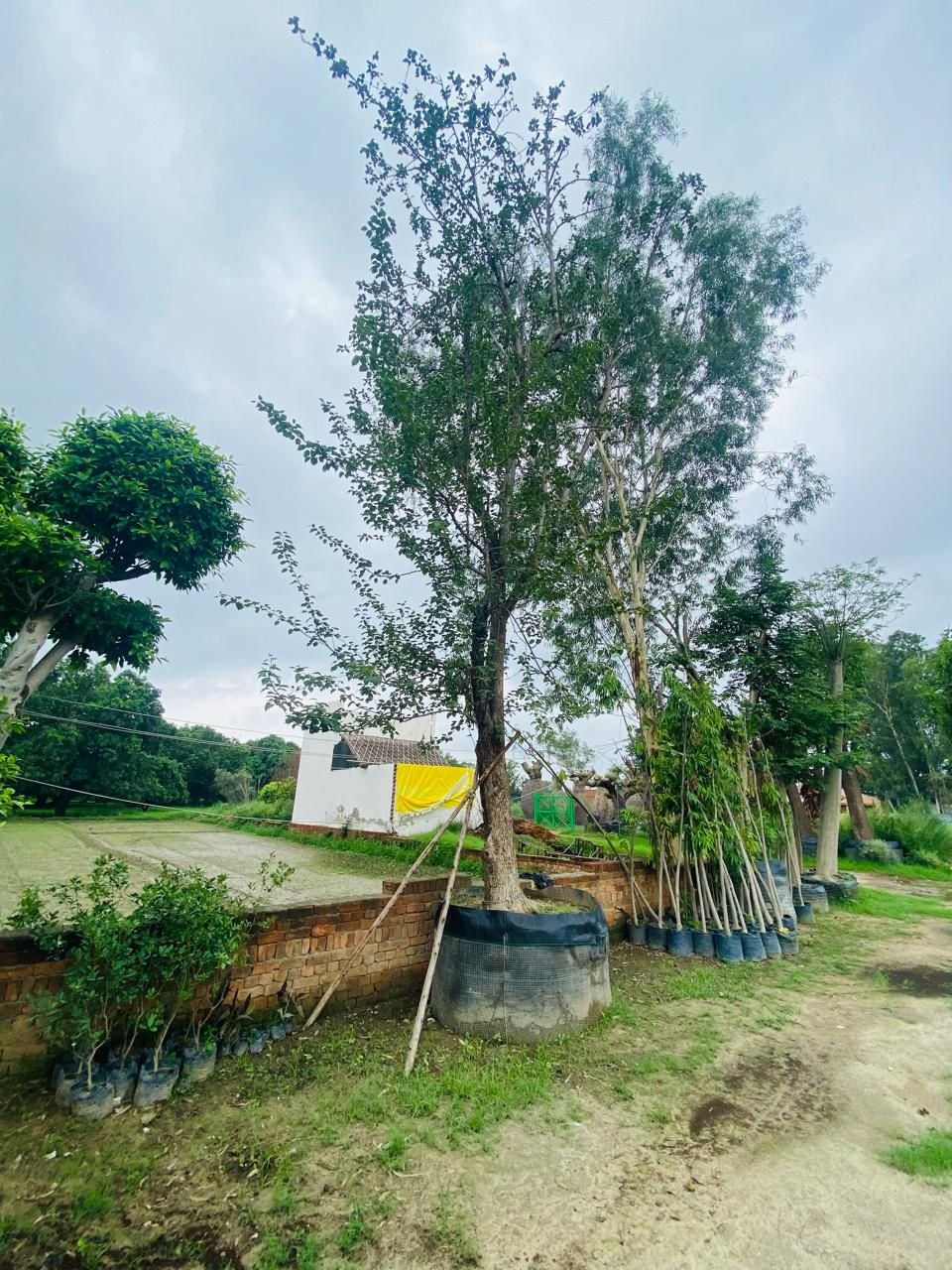
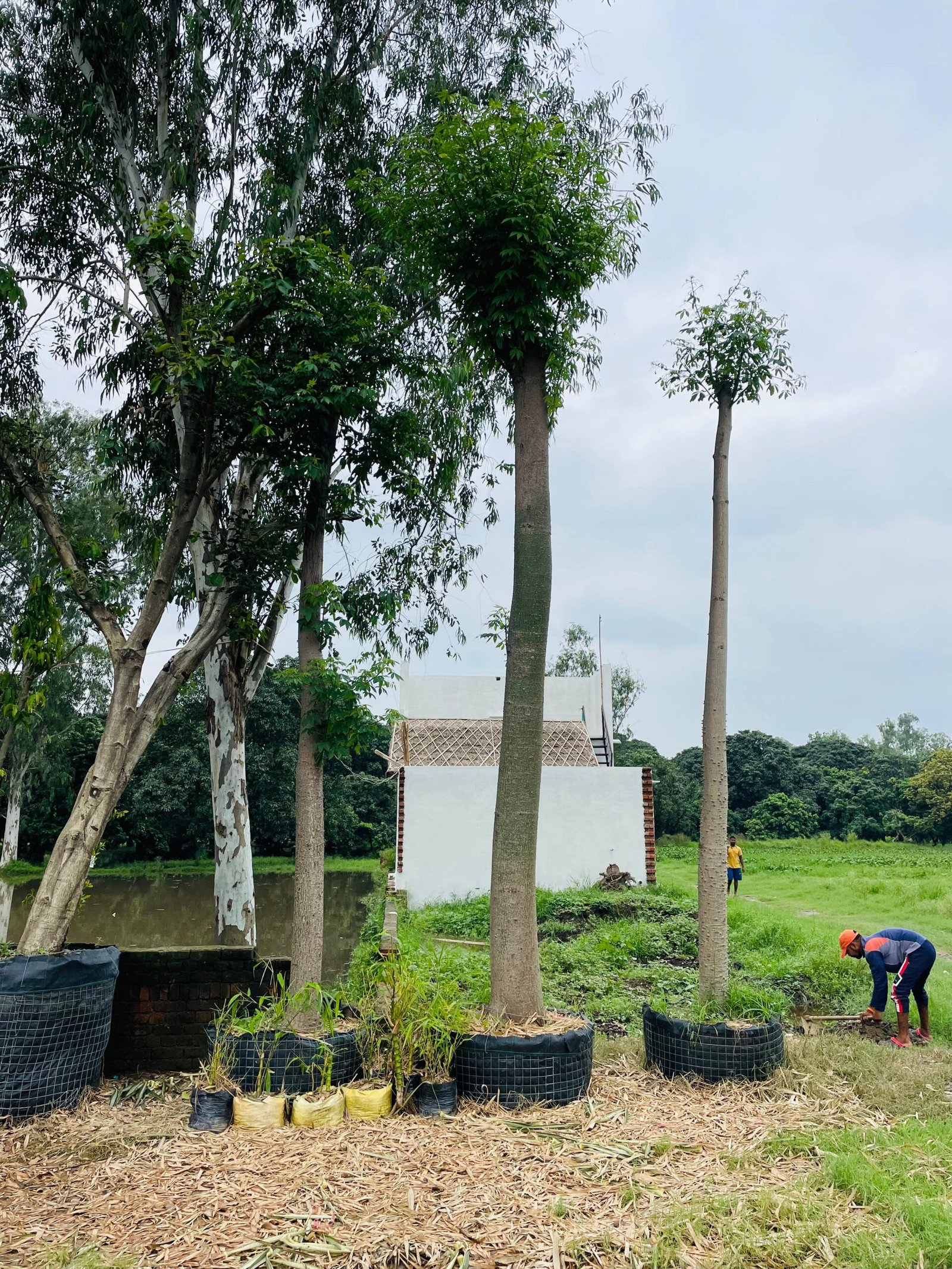
1. Specimen TreesMeaning: A specimen tree is planted as a focal point or centerpiece in a garden, park, or landscape.Purpose: Selected for their unique shape, size, foliage, flowers, or bark that make them stand out.Examples:Delonix regia (Gulmohar / Flame Tree – for bright red flowers)Bismarckia nobilis (Bismarck Palm – for bold silvery-blue foliage)Ficus benghalensis (Banyan Tree – for wide canopy and aerial roots)Magnolia grandiflora (Magnolia – for large white flowers)Ceiba speciosa (Silk Floss Tree – for its spiny trunk and showy flowers)2. Avenue TreesMeaning: Trees planted in rows on both sides of roads, pathways, or driveways to provide shade, beauty, and structure.Purpose:Provide shade for pedestrians and vehicles.Enhance the beauty of roads, campuses, and parks.Reduce dust and noise pollution.Examples:Delonix regia (Gulmohar) – summer floweringPolyalthia longifolia (Ashoka Tree) – tall and columnarAzadirachta indica (Neem Tree) – shade and medicinal valueCassia fistula (Amaltas / Golden Shower Tree) – bright yellow flowers in summerTerminalia catappa (Indian Almond Tree) – broad canopy, good shadeSaraca asoca (Ashoka) – evergreen, ornamental Compare Quick view Add to wishlist Specimen Avenues trees Specimen Avenues trees Read more ENQUIRY! Difference Between Specimen and Avenue TreesFeatureSpecimen TreesAvenue TreesPlacementPlanted singly, as a highlightPlanted in rows along roads/pathsPurposeFocal point, decorative, ornamentalShade, symmetry, road beautificationSelectionBased on uniqueness and visual impactBased on shade, growth habit, flowering