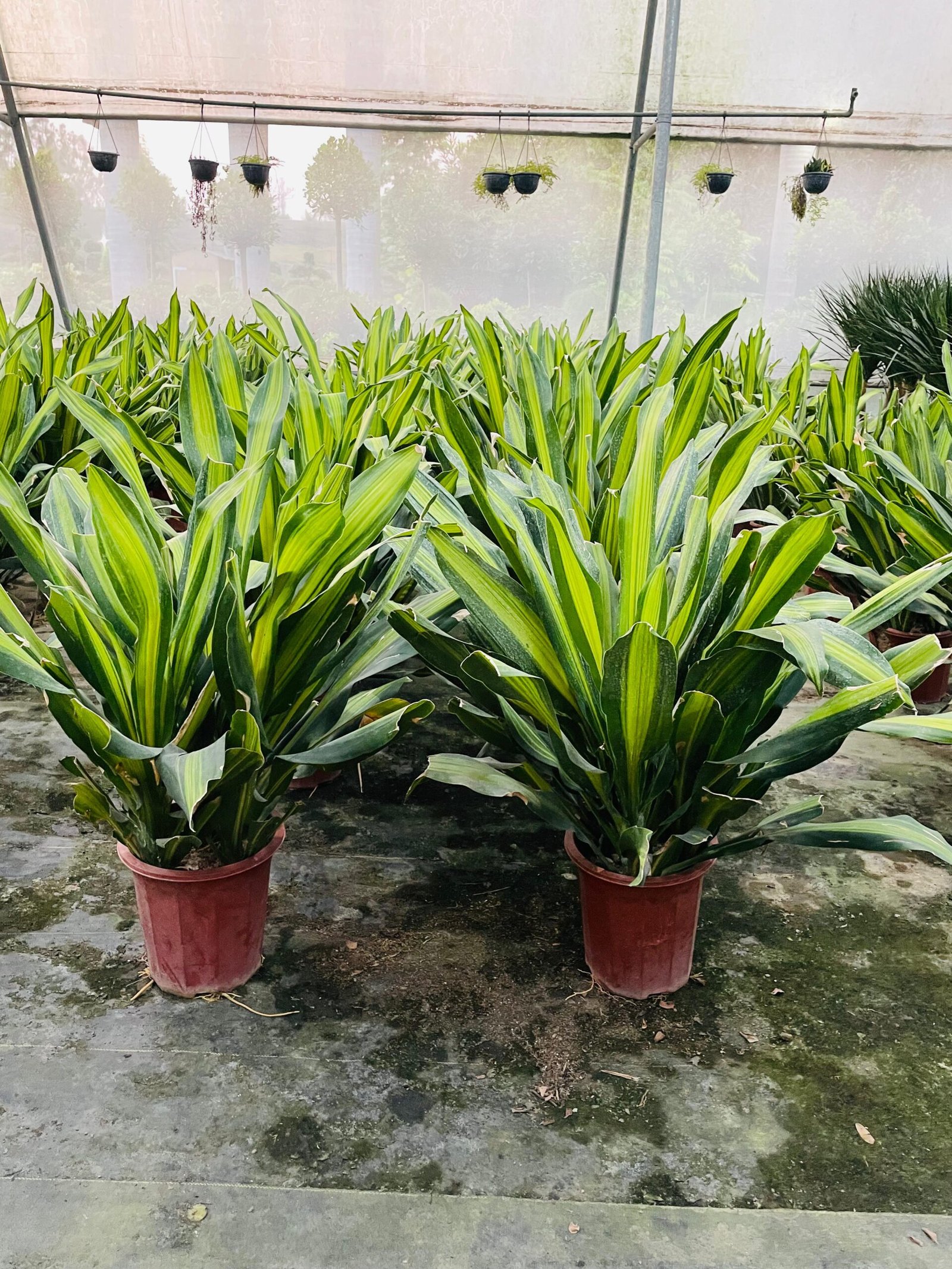
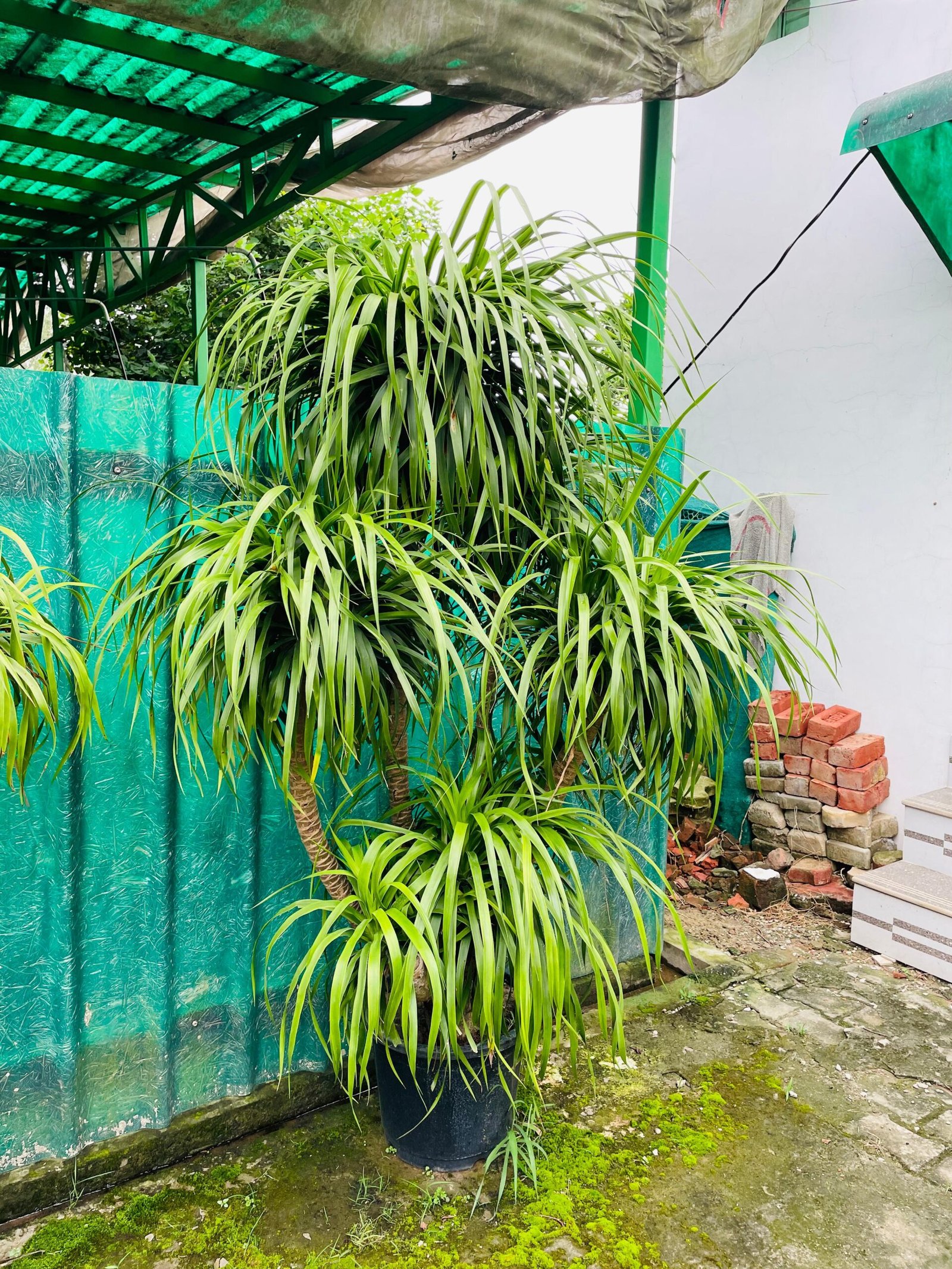
About Dracaena draco
Common Name: Dragon Tree, Canary Islands Dragon Tree
Scientific Name: Dracaena draco
Family: Asparagaceae (formerly placed in Agavaceae)
Native Region: Canary Islands, Madeira, Cape Verde, and parts of western Morocco
Type: Evergreen, slow-growing tree-like succulent
Key Features
Size:
Can grow up to 10–15 meters tall, though very slowly.
Crown spreads widely, forming an umbrella-like shape.
Trunk:
Thick, stout, and branching only after it flowers (dichotomous branching).
Covered with a smooth gray bark.
Leaves:
Long, sword-shaped, bluish-green, clustered at the branch tips.
Each leaf up to 60 cm long.
Flowers:
Small, greenish-white, fragrant clusters.
Appear on mature trees (often after decades).
Fruits:
Orange-red berries about 1–2 cm in diameter.
Attractive to birds.
Unique Feature: “Dragon’s Blood”
When the trunk or leaves are cut, the sap oxidizes and turns a dark reddish color, known as dragon’s blood.
Historically used as a dye, varnish, medicine, and in rituals.
Growth and Cultivation
Soil: Prefers well-drained sandy or rocky soil.
Sunlight: Needs full sun to partial shade.
Water: Very drought-tolerant; minimal watering once established.
Climate: Thrives in subtropical and Mediterranean climates; tolerates light frost.
Growth Rate: Extremely slow—can take 10–15 years to form a trunk, and centuries to reach full size.
Longevity: Known to live for hundreds, even over a thousand years.

Ecological and Cultural Importance
Ornamental Use: Planted in gardens, parks, and as a striking specimen tree.
Cultural Value:
Sacred in ancient Canary Islands traditions.
Sap (dragon’s blood) used in traditional medicine and art.
Conservation Status: Considered vulnerable in the wild due to habitat loss, though widely cultivated in gardens.