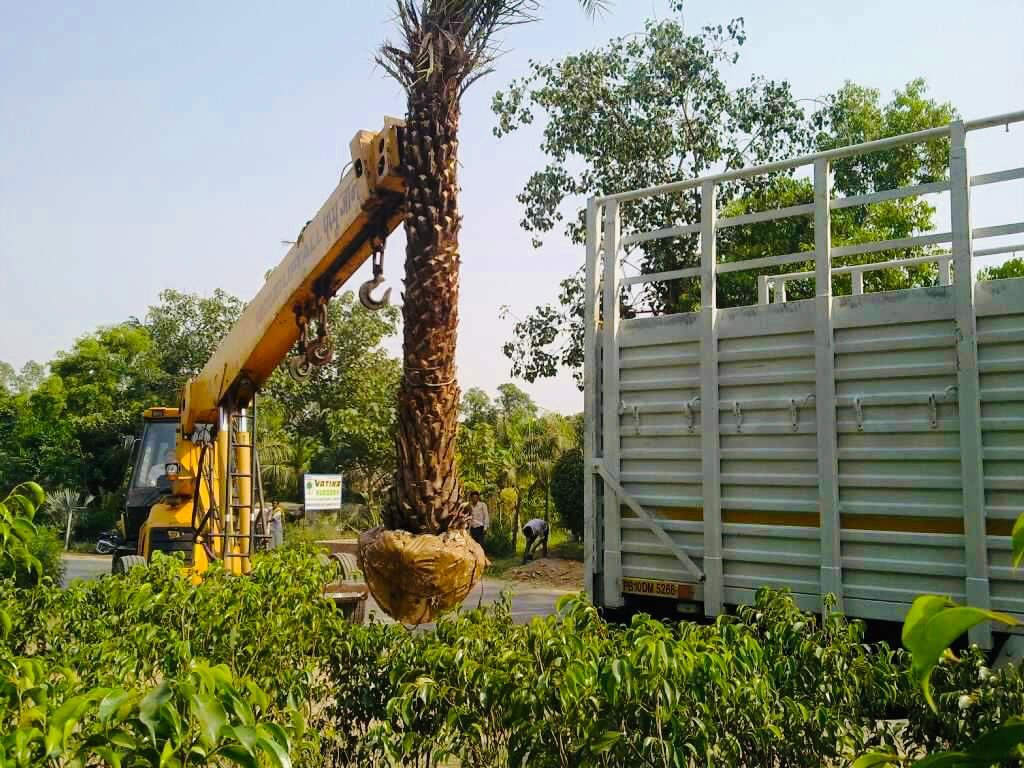
About Date Palm

  • Scientific Name: Phoenix dactylifera

  • Family: Arecaceae (Palm family)

  • Common Name: Date Palm

  • Native Region: Believed to have originated in the Middle East and North Africa, cultivated for thousands of years.

  • Type: Perennial, dioecious palm (separate male and female trees).


Key Features

  1. Size: Grows 15–25 meters (50–80 feet) tall with a spread of about 6–8 meters.

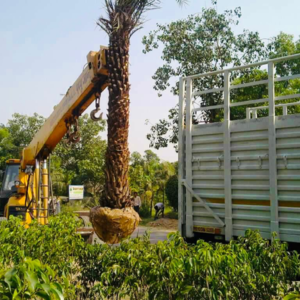
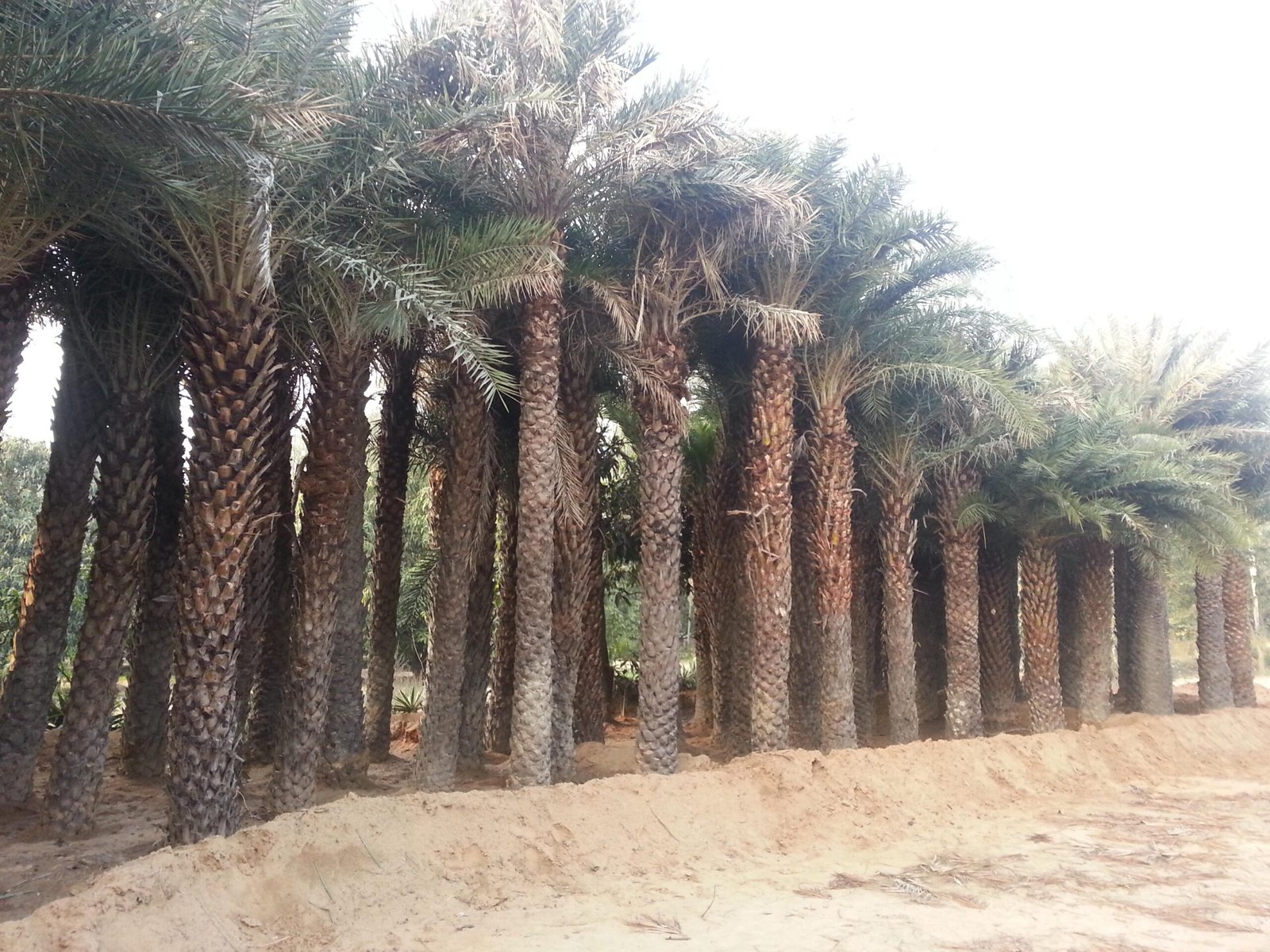
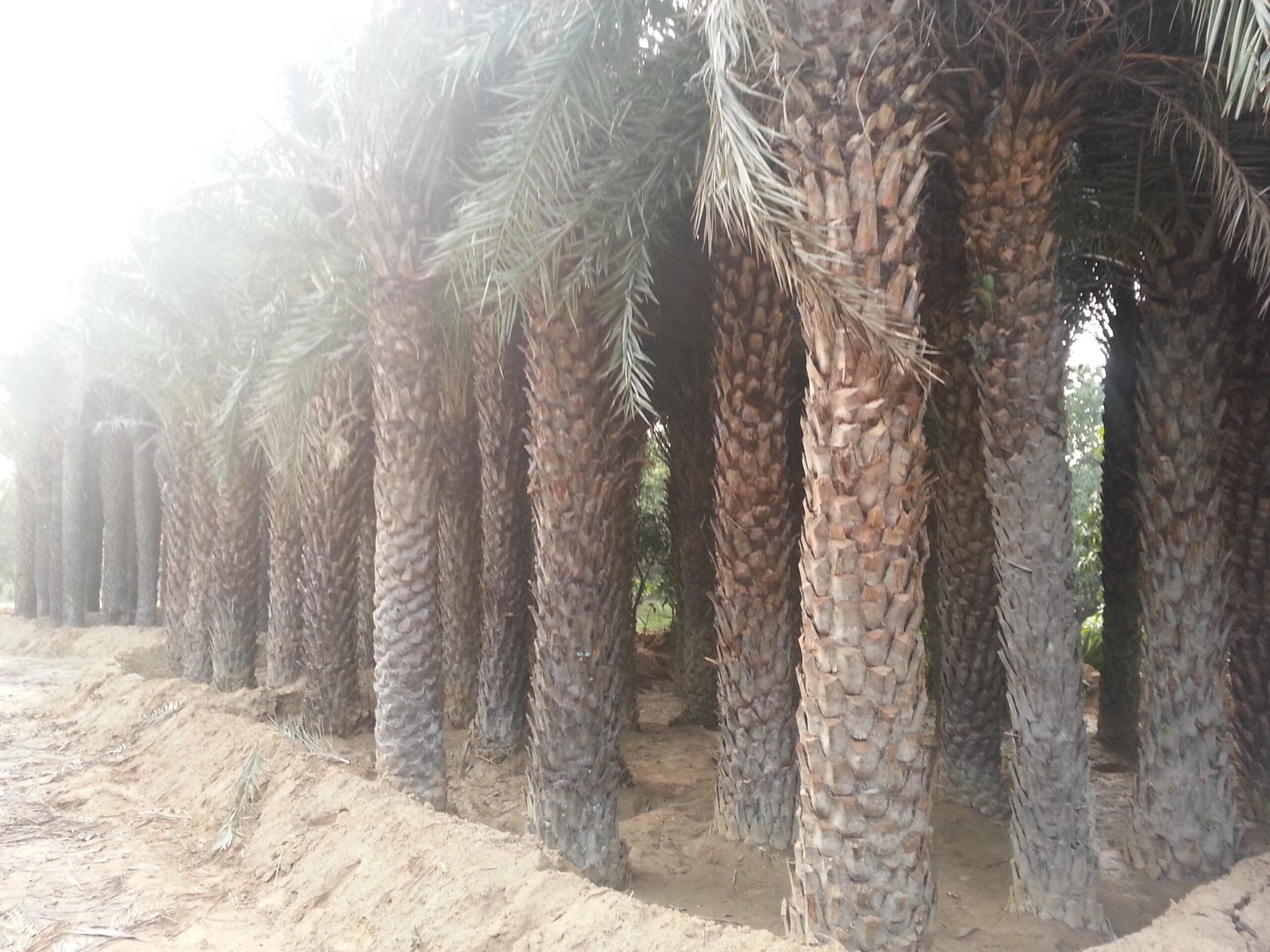
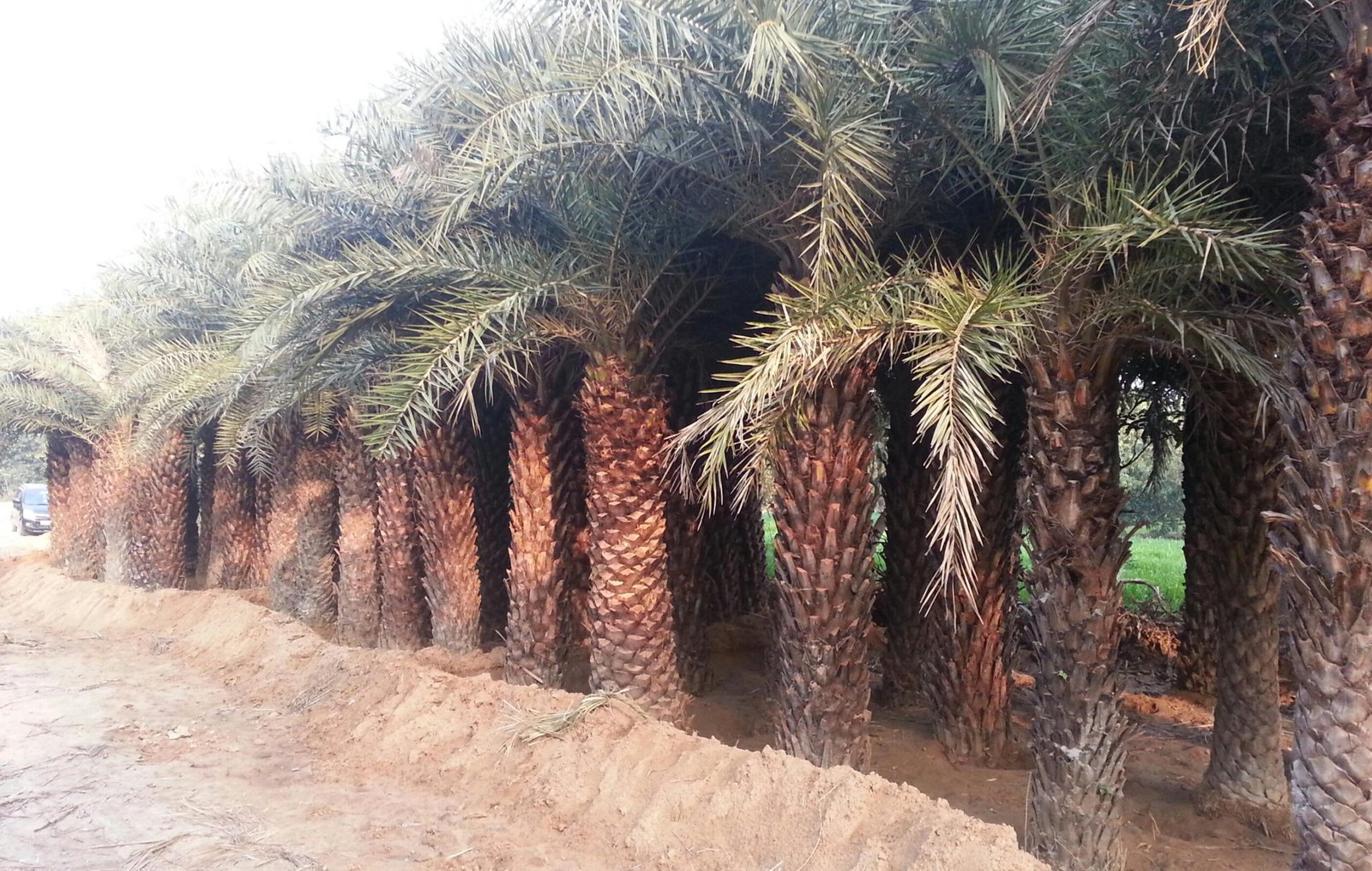
  2. Trunk: Tall, columnar, rough with persistent leaf bases or scars.

  3. Leaves:

    • Pinnate (feather-like), up to 4–6 meters long.

    • Grey-green in color with sharp spines at the base.

  4. Flowers:

    • Small, creamy-white, fragrant.

    • Male and female flowers occur on separate trees.

  5. Fruit (Dates):

    • Oval, fleshy drupes about 3–7 cm long.

    • Colors vary from yellow to red-brown to black when ripe.

    • Sweet, rich in natural sugars, vitamins, and minerals.

Growth and Cultivation

  • Soil: Prefers well-drained sandy loam, tolerant of saline soils.

  • Sunlight: Requires full sun.

  • Water: Drought-tolerant but produces best fruit with regular irrigation.

  • Climate: Thrives in hot, arid regions with long summers and low humidity.

  • Pollination: Often hand-pollinated in commercial plantations to ensure higher yield and fruit quality.

  • Lifespan: Productive for 70–100 years.


Ecological and Cultural Importance

  • Food: Staple fruit in the Middle East, consumed fresh, dried, or processed.

  • By-products:

    • Seeds used for animal feed and sometimes ground into flour.

    • Leaves used for mats, baskets, and handicrafts.

    • Trunk wood used in construction.

  • Cultural Significance:

    • Dates are mentioned in ancient texts, including the Bible and Quran.

    • Traditionally offered during Ramadan to break the fast.