
* Origin : Argentina, Urugüay, Chile, Brasil
* There are two varieties : Butia Yatay and Butia Capitata.
The diference between both is the trunk perimeter, Butia Capitata is bigger and leaves are longer.
* The Butias can arrive in several years ( 30 – 50 years old ) to 12 meters high.
* Colour of leaves : blue
* Very resisitent to cold weather , to -10ºC , -14ºC, to the wind and the Sea salinity.
* AVAILABLE IN STOCK :
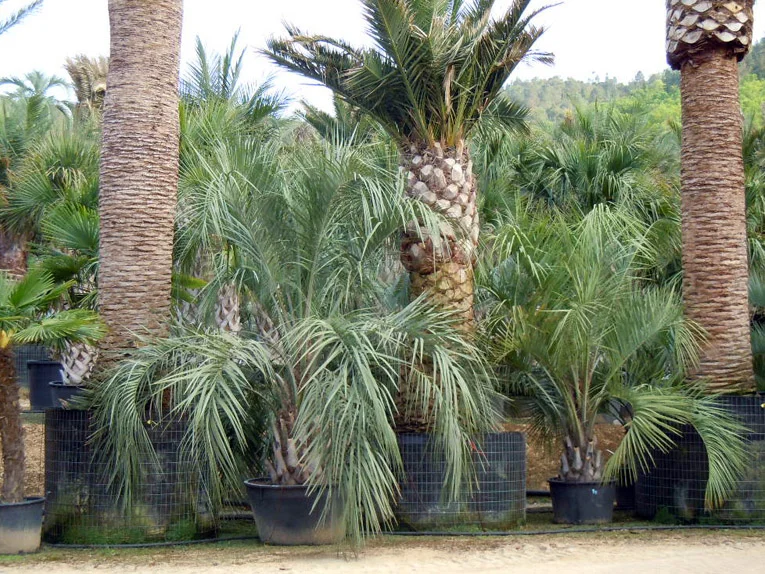
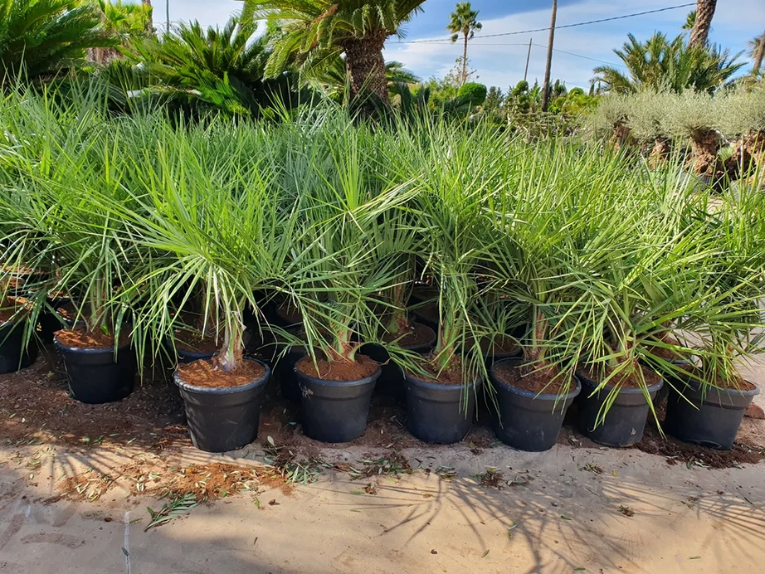
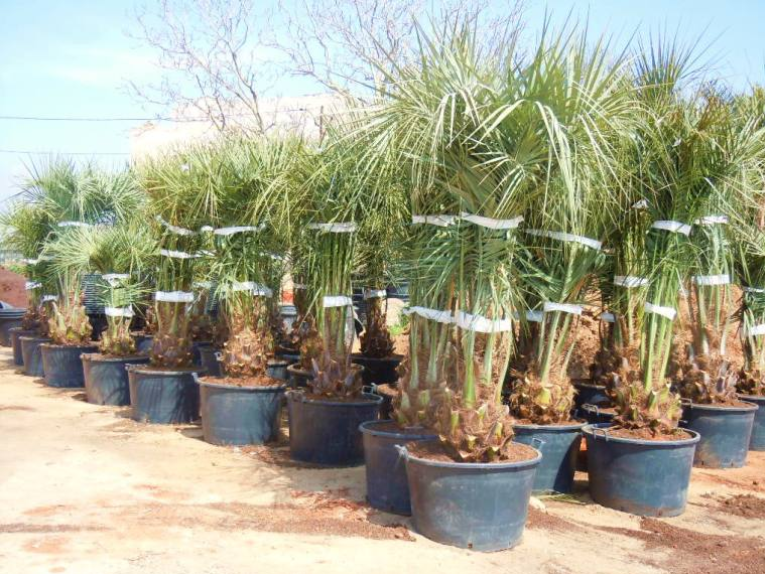
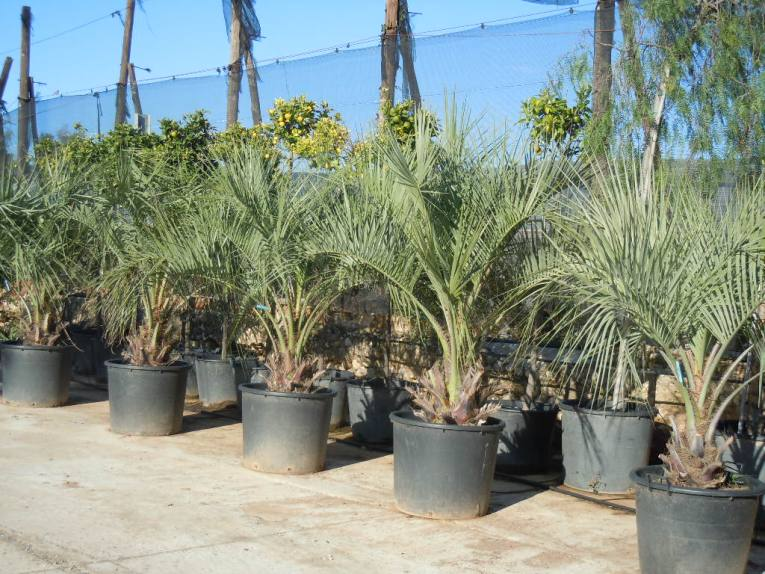
– Pots 30 – 40 lit, 0,20 – 0,25m. high trunk + leaves.
– Pots 150 lit., 0,25 – 0,30m. high trunk + leaves.
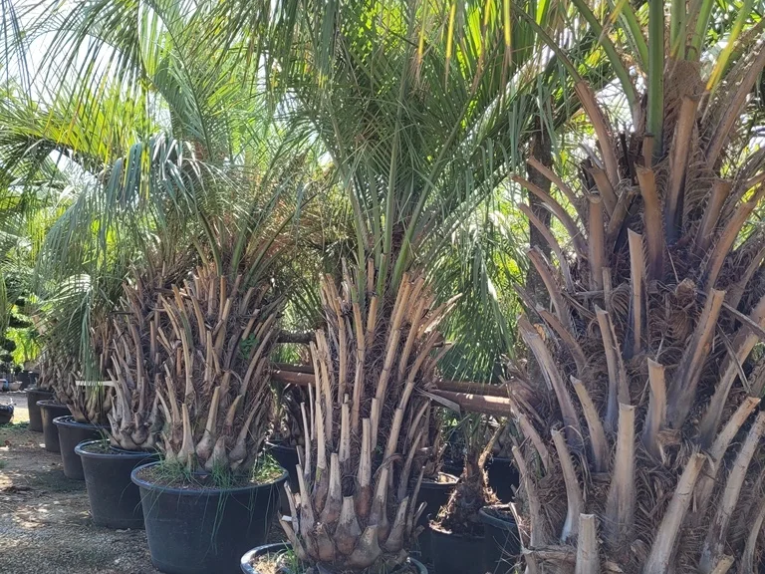
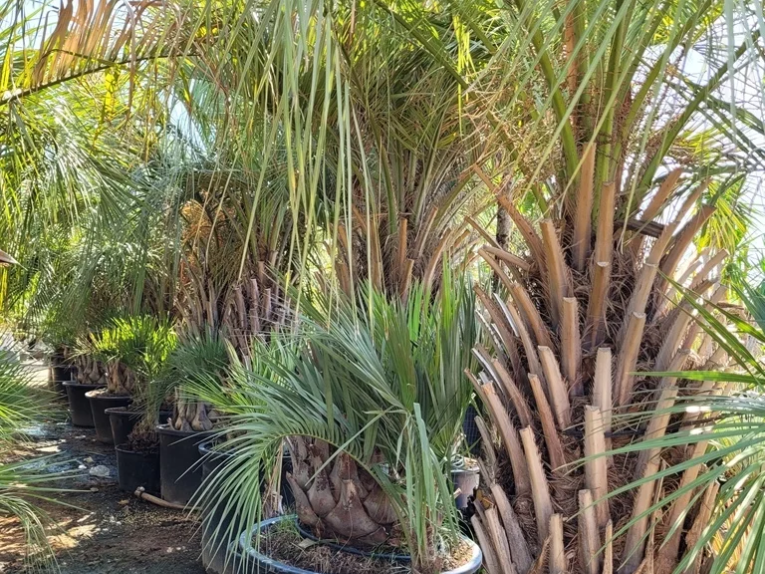
– Pots 210 lit., 0,40 – 0,50m. high trunk + leaves.
– Plants from 1m. , 1,5m. , 2m. high trunk and Exemplary Plants from 3 – 4 – 5 – 6 – 7m. high trunk.
Discover the fascinating history of Butia at plantas.net
The Butia genus comprises a series of elegant and hardy palm trees notable for their curved foliage and edible fruits . These palm trees, native to South America , are highly valued in gardening for their exotic appearance, cold resistance, and adaptability to different soil types .
Among the best-known species is Butia capitata , also called the jelly palm , because its fruits are used to make sweets and jams.
In this article, you'll learn all about the history, origin, description, and benefits of growing a Butia . You can also purchase this spectacular palm tree with a quality guarantee and direct shipping to your home at our specialty store, plantas.net .
Explore the world of Butia and add a tropical and elegant touch to your garden or landscape!
Butia: History and origin
Butia palms are native to South America , where they grow naturally in Brazil, Uruguay, Paraguay, and Argentina . These palms are found primarily in open areas, savannas, and dry hills , adapting to both warm and cooler climates.
Among the most notable species within this genus are:
- Butia capitata (Jelly Palm): The most popular and widely cultivated, with edible fruits used to make jams and liqueurs.
- Butia yatay: Larger in size, reaching up to 10 meters in height , ideal for large gardens and urban landscaping.
- Butia odorata: Similar to Butia capitata , but with more vigorous growth and more bluish leaves.
Thanks to their cold resistance , many Butia species have been introduced to Europe, North America and Australia , where they are widely used in gardens and public parks.
Description of the Butia
Butia palms are moderately to slowly growing , with an elegant appearance and curved foliage that gives them a very attractive appearance. Their main characteristics are:
- Variable height: Depending on the species, they can measure between 3 and 10 meters in height.
- Pinnate and curved leaves: Its foliage is greyish green or bluish , with a characteristic downward arch that differentiates them from other palm trees.
- Robust and ringed trunk: Its trunk is thick and has remains of old leaves that give it a rough texture.
- Flowering and fruits: It produces inflorescences with yellow or orange flowers and round yellow or reddish fruits , known for their sweet and pleasant flavor.
- High resistance: It tolerates moderate frosts , poor soils and periods of drought, making it ideal for dry gardens and xeriscaping .
With its combination of beauty, resilience, and edible fruit , the Butia is a perfect choice for those seeking an exotic and functional palm tree for their gardens or landscaping projects.
Distribution and habitat of the Butia
The Butia genus is native to South America , with natural occurrences in countries such as Brazil, Argentina, Uruguay, and Paraguay . These palms grow in savannahs, plains, and hills , where they adapt to sandy, clayey, and rocky soils , demonstrating great resistance to extreme conditions.
Depending on the species, Butia is found in different environments:
- Butia capitata (Jelly Palm): Grows in dry, sandy soils, adapting well to warm and temperate climates.
- Butia yatay: It grows in open grasslands and dry forests, resisting frosts down to -10°C .
- Butia odorata: Adapts to both coastal climates and inland areas with cooler temperatures.
Thanks to its great adaptability , Butia has been introduced to many countries, where it is used in gardens, parks, and urban landscaping . Today, it is cultivated in:
- Mediterranean regions such as Spain, Italy and Portugal, where it is popular for its resistance to heat and drought.
- United States , in states such as Florida, Texas and California, where its curved foliage and robust trunk make it an attractive ornamental option.
- Australia and South Africa , where it is used in boulevards and avenues due to its resistance to strong winds and poor soils.
Its ability to withstand moderate frosts and long droughts makes it one of the most versatile palm trees for landscaping in temperate and subtropical climates.
Conservation status of Butia and its importance
Butia is not in danger of extinction , and its cultivation in nurseries guarantees its availability on the market. However, some species have seen their wild populations reduced due to agricultural expansion and urbanization in their natural habitat.
On an ecological and ornamental level, Butias are highly valued because:
- They provide shelter and food for birds and mammals, which consume their sugar-rich fruits.
- They contribute to soil conservation , preventing erosion in dry and sandy areas.
- They are key in sustainable landscaping projects , as they require little maintenance and water once established.
- Its fruits are edible , being used in the production of jams, liqueurs and desserts in South America.
Thanks to its beauty, functionality and resistance , the Butia remains one of the most appreciated palm trees in the world of gardening and landscape architecture.
Spread
The Butia is propagated primarily by seed , an effective but slow method, as germination can take several months. Despite this, it is the most common method of propagation for this palm.
Propagation by seeds:
- Seed collection: They are obtained from the ripe fruits of the palm tree, which are yellow, orange or reddish in color and contain a single hard seed inside.
- Cleaning and soaking:
- Remove the pulp from the fruit and wash the seeds well.
- Soak in warm water for 3-5 days , changing the water daily to eliminate natural germination inhibitors.
- Sowing in suitable substrate:
- Use a mixture of sand, peat and perlite to ensure good drainage.
- Sow seeds 2-3 cm deep in a well-draining container.
- Optimal conditions:
- Keep the substrate moist, but not flooded.
- Place the pots in a warm environment with temperatures between 25 and 30°C .
- Germination time: Germination can take between 2 and 9 months , depending on the species and environmental conditions.
Due to their slow growth , Butias can be kept in pots for the first few years before being transplanted to their final location.
Butia Offer
At our specialty store at plantas.net , we offer a wide selection of Butia in different sizes and formats, ideal for any type of landscaping project:
- Young potted specimens , perfect for those who want to start growing from scratch.
- Medium-sized palm trees , ready to be transplanted in gardens, parks and avenues.
- Fully developed butias , ideal for large-scale urban projects or landscaping in public spaces.
All our plants are grown in specialized nurseries , ensuring a healthy, resilient palm tree that adapts well to new environments. We also provide personalized advice to help you choose the best option for your needs.
If you're looking for a hardy, ornamental palm tree with edible fruit , the Butia is the ideal choice to add a tropical and sophisticated touch to any space.
Butia Care
The Butia is a low-maintenance palm tree , but it does require some basic care to ensure its healthy growth and longevity.
1. Sun exposure and location:
- It prefers full sun , although it can tolerate semi-shade in its early stages.
- It is ideal for open spaces , such as gardens, parks and avenues, due to its height and arching foliage.
2. Moderate watering:
- It needs regular watering , especially during its first years.
- It tolerates drought well once established, but watering once or twice a week is recommended in warm climates.
3. Soil and fertilization:
- It prefers well-drained soils rich in organic matter , but adapts to sandy and clayey soils.
- Apply fertilizer 2-3 times a year to encourage healthy growth.
4. Pruning and maintenance:
- Dry or damaged leaves should be removed to improve their appearance and prevent pests.
- Excessive pruning is not necessary, as its leaves renew themselves naturally.
5. Pest protection:
- It is resistant to most pests, but can be affected by mealybugs or trunk beetles under stress conditions.
- Apply organic treatments if pests are detected and maintain good ventilation at the base of the trunk.
By following these steps, the Butia will grow strong and healthy, providing shade, freshness, and a stunning visual impact to any environment.
Butia Purchase Conditions
If you're looking to purchase a Butia , at plantas.net we offer an exclusive selection of this palm tree, guaranteeing quality and a simple and secure purchasing process . Below are our terms and conditions:
- Variety of options: We have Butias in different sizes, from young potted specimens to fully grown palm trees ready for outdoor planting.
- Home delivery: We ship throughout Europe, ensuring that your Butia arrives in perfect condition to your home, office, or landscaping project.
- Competitive Prices: We offer affordable prices and special discounts on large purchases for urban projects, private gardens, or large-scale landscaping.
- Simple purchasing process: Our online store makes it easy to select and purchase your Butia . Simply choose the size you want, and our team will take care of the rest, including packaging and secure shipping.
- Personalized advice: We have a team of experts to answer all your questions about the ideal location, watering, and care for Butia .
- Terms and Conditions: Before completing your purchase, we recommend that you read our terms and conditions, where you will find information on warranties, returns, and other important aspects .
Other plants related to Butia
If you're interested in the Butia , you'll also find other palm species in our store that can complement its presence in gardening and landscaping projects. Some recommended options are:
- Phoenix Canariensis: Known as the Canary Island date palm , it is a large and elegant option for gardens and avenues.
- Washingtonia Robusta: Fast-growing and tall, perfect for parks, boulevards and urban landscaping.
- Livistona Chinensis: A palm tree with fan-shaped leaves, ideal for tropical gardens and open spaces.
- Syagrus Romanzoffiana (Feather Coconut): Similar to Butia , but with faster growth and more feathery leaves.
- Trachycarpus Fortunei: Perfect for colder climates, as it is one of the palm trees most resistant to low temperatures.