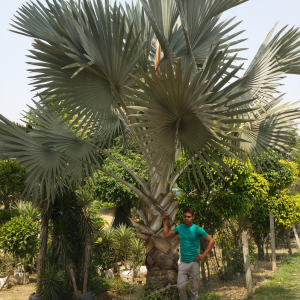
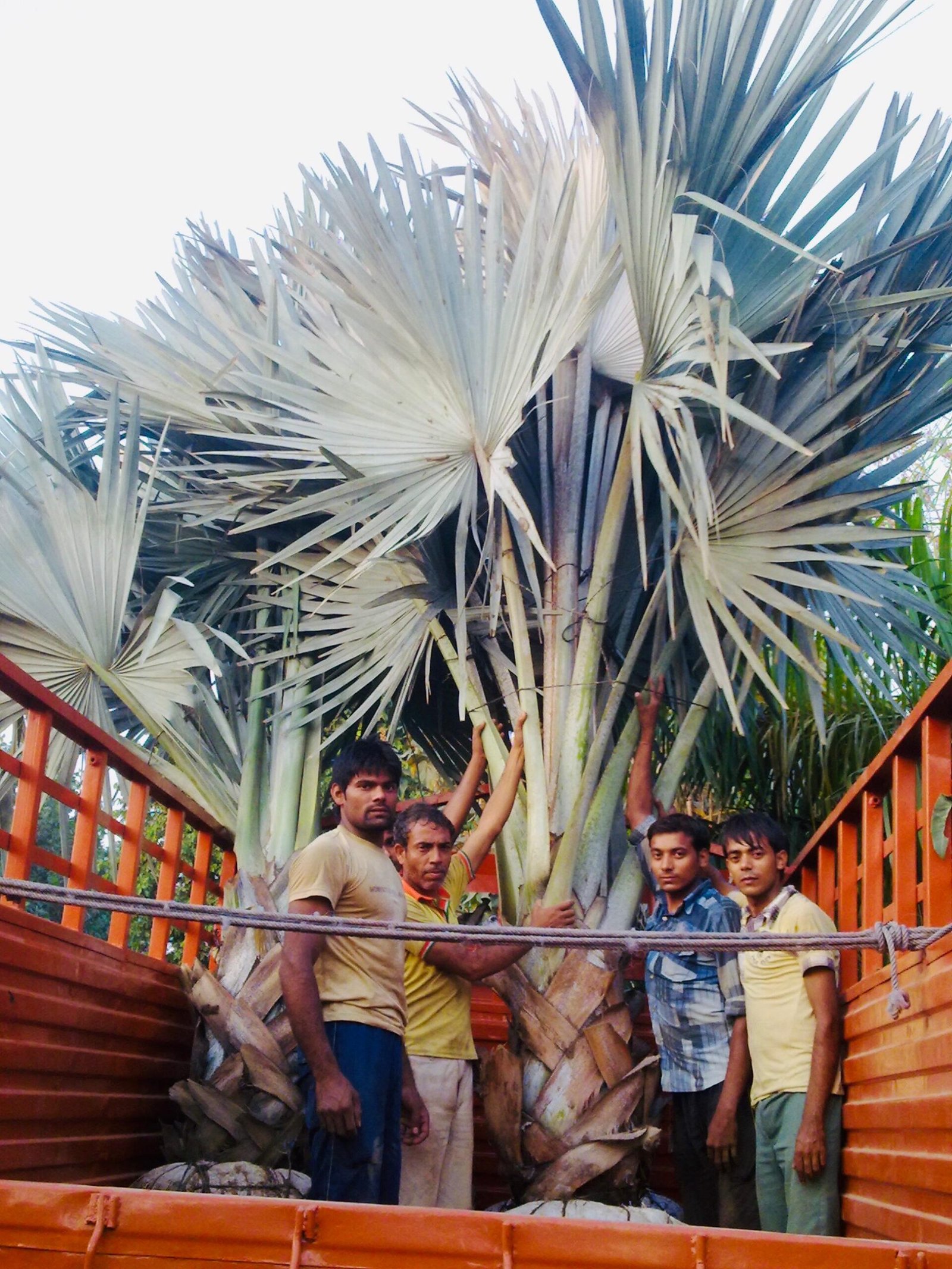
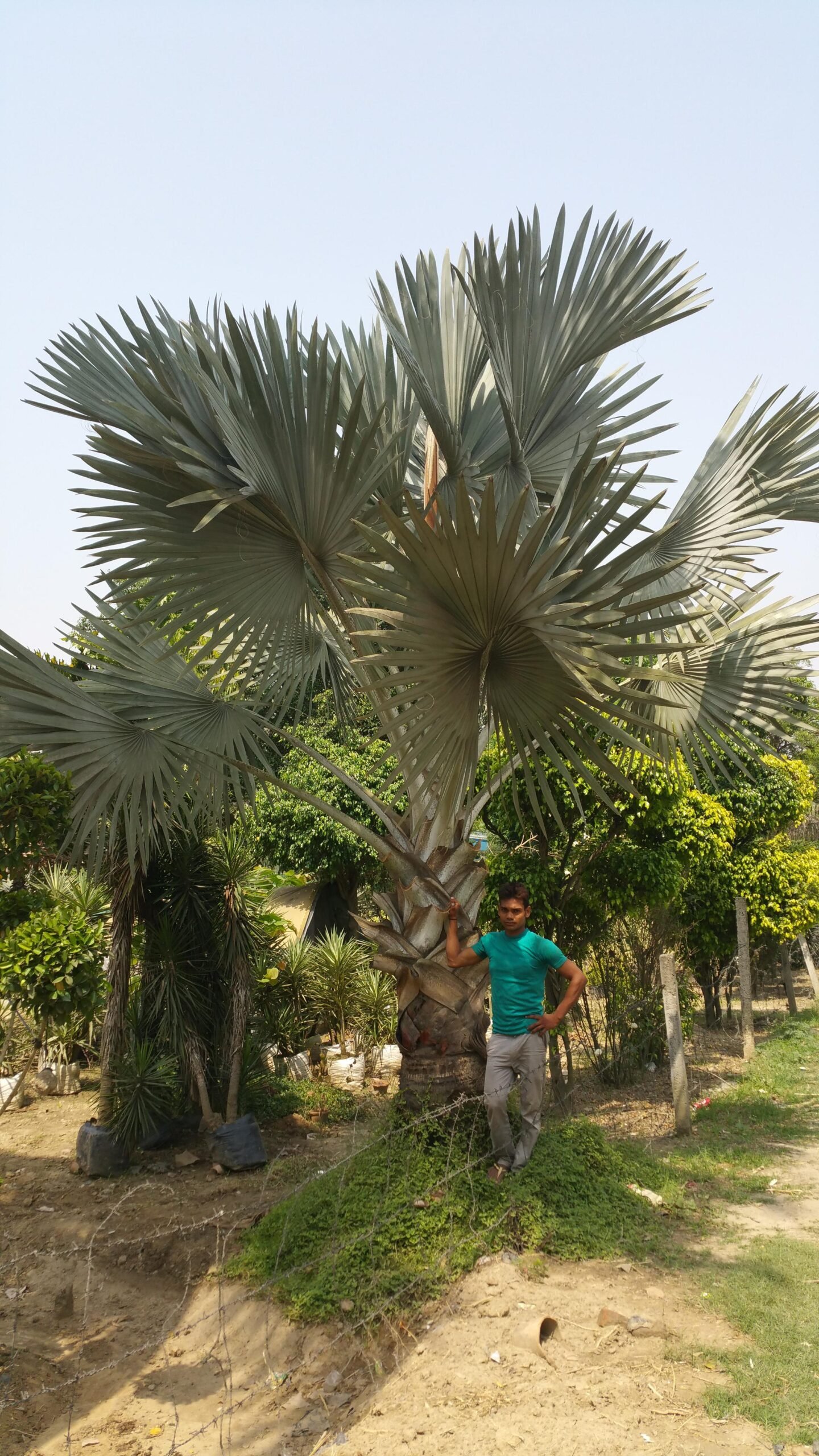
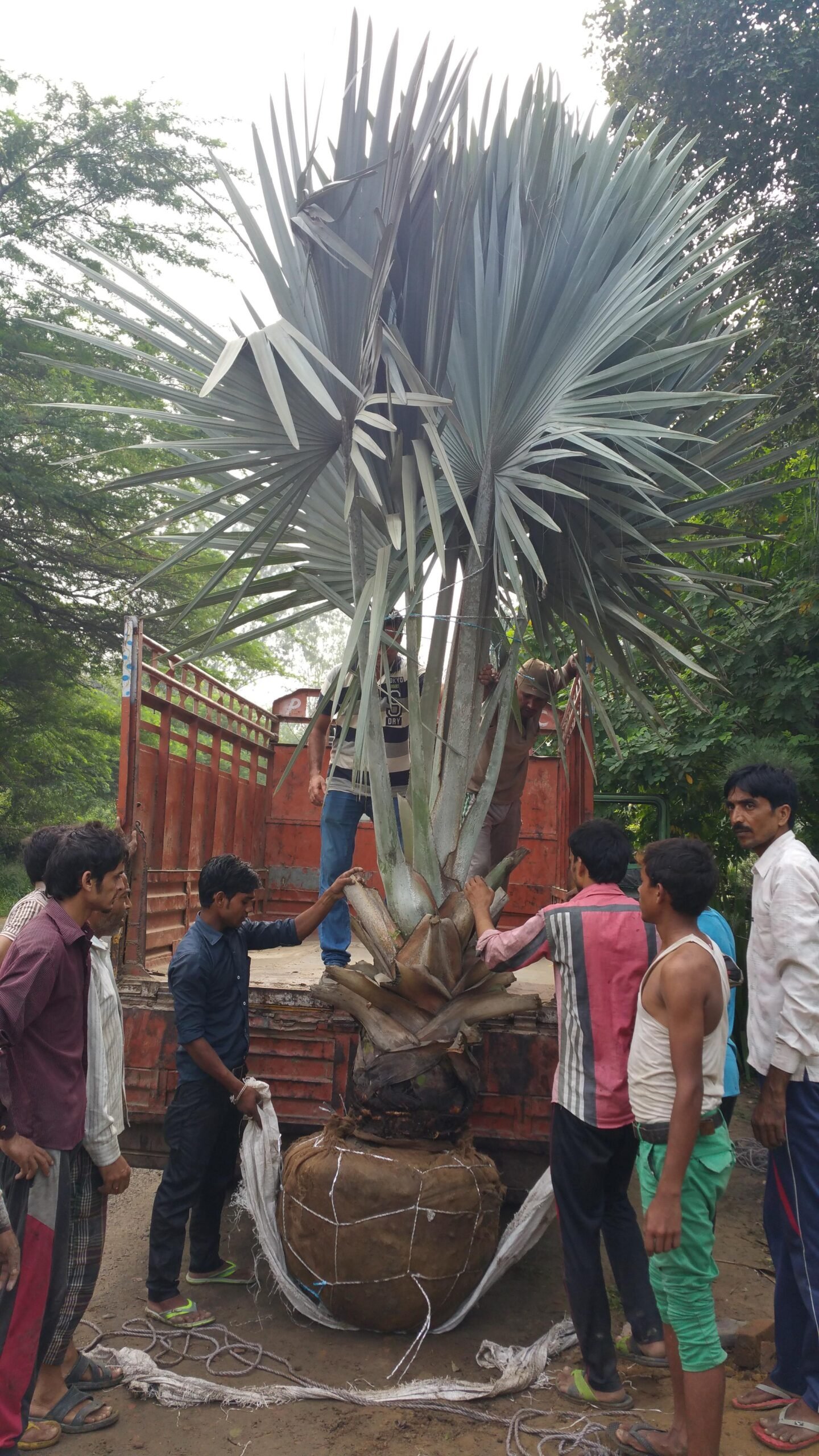
About Bismarckia nobilis

  • Common Name: Bismarck Palm

  • Family: Arecaceae (Palm family)

  • Native Region: Madagascar

  • Type: Large, single-trunk fan palm, widely grown as an ornamental plant.


Key Features

  1. Size: Can reach 12–18 meters (40–60 feet) tall, with a spread of 6–7 meters (20–23 feet).

  2. Trunk: Thick, solitary, gray trunk with noticeable ringed leaf scars, about 30–45 cm in diameter.

  3. Leaves:

    • Huge, circular, fan-shaped leaves up to 3 meters (10 feet) wide.

    • Distinctive silvery-blue to gray-green color, which gives the tree a striking appearance.

    • Leaves are stiff, with many segments radiating from the center.

  4. Flowers:

    • Small, yellowish flowers on long stalks.

    • The species is dioecious, meaning male and female flowers are on separate trees.

  5. Fruits: Oval, dark brown to black, about 3–5 cm long, produced only by female trees.

Growth and Cultivation

  • Soil: Prefers well-drained sandy or loamy soil, but adaptable to different soil types.

  • Sunlight: Requires full sun for best growth.

  • Water: Drought-tolerant once established, but benefits from moderate watering.

  • Climate: Thrives in tropical and subtropical climates, hardy to about -3°C (26°F).

  • Growth Rate: Moderate when young, faster as it matures.


Ecological and Cultural Importance

  • Ornamental Value: Highly valued in landscaping for its dramatic silver-blue foliage and architectural form. Often planted in parks, gardens, and large open spaces.

  • Wild Habitat: Native to Madagascar, where it grows in open grasslands and savannas.

  • Cultural Note: Its bold and symmetrical appearance makes it a popular choice for creating a focal point in landscape design.