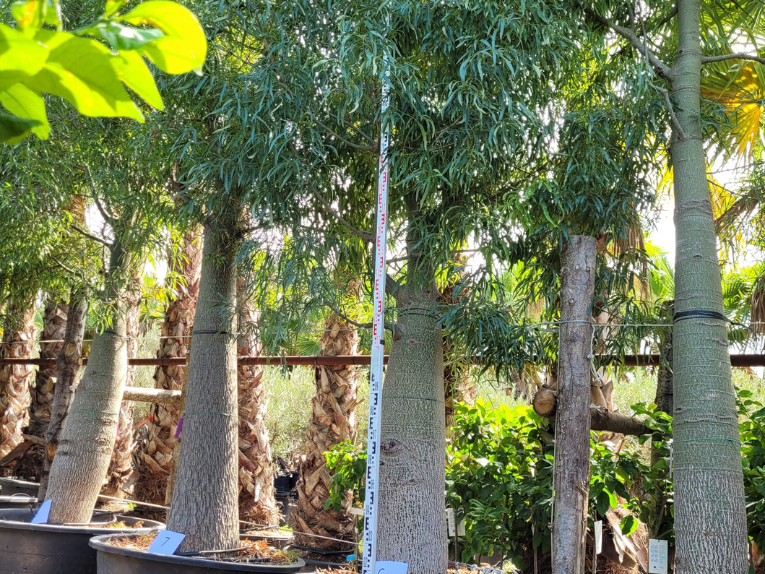
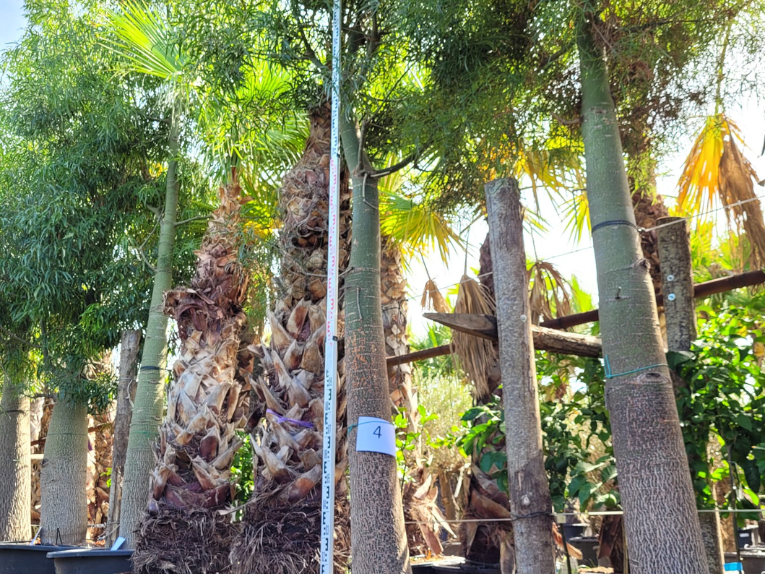
Discover the fascinating history of Brachychiton rupestris at plantas.net
The Brachychiton rupestris , known as the bottle tree , is a species native to Australia notable for its swollen, bottle-shaped trunk , capable of storing water to survive in extreme conditions. This tree is highly valued in dry landscaping and low-maintenance gardens , thanks to its drought resistance and attractive ornamental appearance.
In this article, you'll learn all about the history, origin, description, and benefits of growing a Brachychiton rupestris . You can also purchase this unique tree with a quality guarantee and direct shipping to your home at our specialty store, plantas.net .
Explore the world of Brachychiton rupestris and add an exotic and resilient touch to your garden or urban landscape!
Brachychiton rupestris: History and origin
Brachychiton rupestris is native to Queensland, Australia , where it grows in dry and semi-arid areas . Its scientific name comes from the Greek words brachys (short) and chiton (tunic), referring to its seed covering.
This tree has been used by Indigenous Australian peoples for centuries due to its many benefits:
- Natural water reservoir: Its trunk can retain large amounts of water, serving as a source of hydration in times of drought.
- Edible leaves and seeds: Used in traditional food.
- Fibrous bark: Used in the manufacture of ropes and textiles.
Thanks to its portability and extreme resistance , the Brachychiton rupestris has been introduced to other regions of the world, especially in:
- United States (California, Texas and Arizona), where it is grown in desert and urban landscaping.
- Mediterranean regions of Europe (Spain, Italy and Greece), where it adapts well to dry and temperate climates.
- South Africa and South America, where its drought resistance makes it an ideal choice for sustainable gardens.
Description of Brachychiton rupestris
Brachychiton rupestris is a slow-growing, sculptural tree with characteristics that make it stand out in any environment.
- Moderate height: It can reach between 10 and 25 meters , depending on growing conditions.
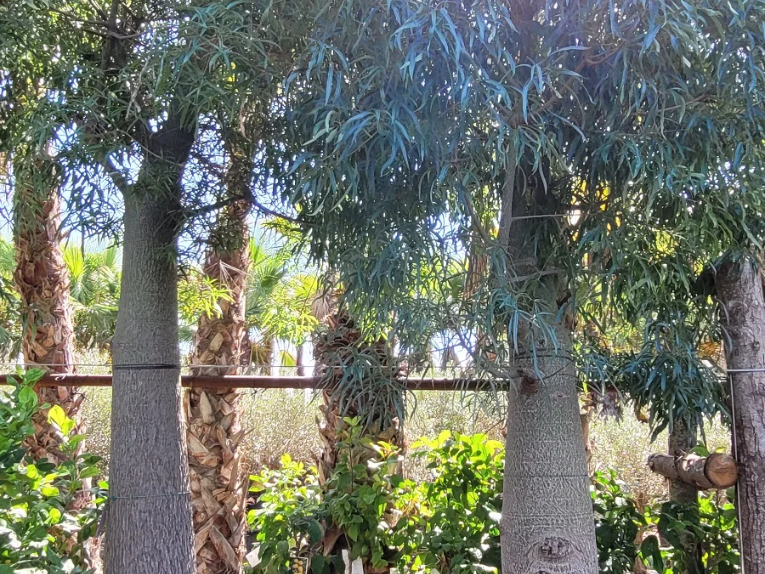
- Bottle-shaped trunk: Its thickened base acts as a natural water reservoir , helping it survive in arid environments.
- Deciduous and thin leaves: During the dry season, it loses its leaves to conserve moisture.
- Discreet flowering: It produces small creamy or yellowish flowers , which contrast with its rough trunk.
- Woody fruits and edible seeds: Their capsules contain nutrient-rich seeds, used as food in some cultures.
- Climate resistance: Tolerates extreme temperatures, resisting light frosts and prolonged droughts .
Thanks to its low maintenance and spectacular appearance , Brachychiton rupestris is a perfect choice for xeriscaping, urban parks and Australian-inspired gardens .
Distribution and habitat of Brachychiton rupestris
Brachychiton rupestris is endemic to Queensland, Australia , where it thrives in dry and semi-arid areas . Its ability to store water in its trunk allows it to survive in extreme climates with irregular rainfall.
This tree is located in:
- Arid and semi-arid regions , where rainfall is scarce and temperatures can be extreme.
- Rocky slopes and poor soils , showing great adaptability to stony terrain.
- Savannas and open forests , where it grows among other drought-resistant species.
Due to its hardiness and ornamental appeal , Brachychiton rupestris has been introduced to many parts of the world, including:
- United States (California, Texas and Arizona) , where it is grown in urban landscaping and dry gardens .
- Mediterranean regions of Europe , such as Spain, Italy and Greece, where it thrives in warm, dry climates.
- South Africa and South America , where its ability to withstand poor soils and drought makes it an excellent choice for reforestation and sustainable landscaping .
Its ability to withstand extreme temperatures and arid soils makes it an ideal tree for low-maintenance gardens and ecological restoration projects .
Conservation status of Brachychiton rupestris and its importance
Brachychiton rupestris is not endangered and is widely cultivated in nurseries and landscaping. However, in some regions of Australia, its numbers have declined due to:
- Deforestation for agricultural expansion , which has reduced its natural habitat.
- Impact of livestock , since some animal species feed on its leaves and tender shoots.
Despite these challenges, this species continues to play a vital role in its ecosystem due to:
- Its ability to retain water in its trunk , which helps maintain humidity in arid soils.
- Its flowers and fruits, which provide food for pollinating insects and birds.
- Its deep root system prevents soil erosion in dry and degraded areas.
Thanks to its beauty and resilience , Brachychiton rupestris remains one of the most prized species in sustainable landscaping, low-maintenance gardening and reforestation projects .
Spread
Brachychiton rupestris is propagated mainly by seed , an effective method although with moderately slow germination.
Propagation by seeds:
- Seed collection:
- They are obtained from woody fruits, which contain several seeds protected by a hard coating.
- It is advisable to use fresh seeds, as their viability decreases over time.
- Cleaning and scarification:
- Remove the seeds from inside the fruit and wash them well.
- To speed up germination, it is recommended to gently sand the outer shell with sandpaper or soak them in hot water for 24 hours .
- Sowing in suitable substrate:
- Use a mixture of sand, peat and perlite to ensure good drainage.
- Sow seeds 1-2 cm deep in individual pots or germination trays.
- Optimal conditions:
- Keep the substrate slightly moist , without flooding.
- Place the pots in a warm environment with temperatures between 20 and 30°C .
- Germination usually takes between 3 and 8 weeks , depending on temperature and humidity.
Given their slow growth , young specimens can remain in pots for several years before being transplanted to their final location.
Brachychiton Rupestris Offer
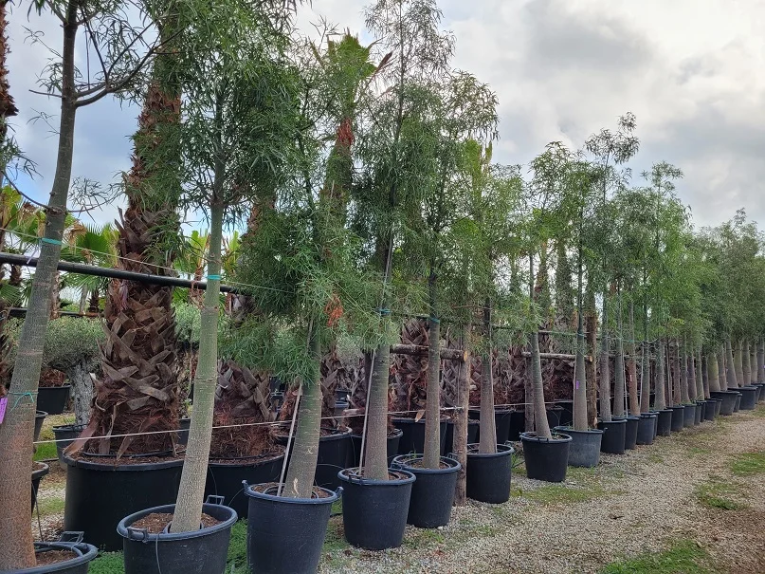
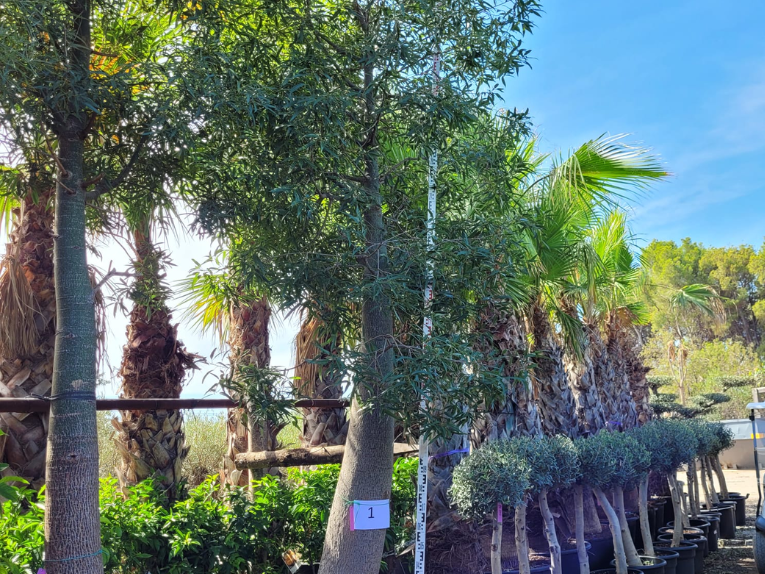
In our specialty store at plantas.net , we offer a wide selection of Brachychiton rupestris in different sizes and formats, ideal for any type of landscaping project:
- Young potted specimens , perfect for those who want to start growing from scratch.
- Medium-sized trees , ready for transplanting in dry gardens and xeriscaping.
- Fully developed Brachychiton rupestris , ideal for parks, avenues and landscaping in arid areas.
All our specimens are grown in specialized nurseries , ensuring a healthy, resilient tree that adapts well to new environments. We also provide personalized advice to help you choose the best option for your needs.
If you are looking for a sculptural, hardy, and low-maintenance tree , the Brachychiton rupestris is the perfect choice for dry gardens, sustainable landscaping, and eco-friendly projects .
Brachychiton Rupestris Care
The Brachychiton rupestris is a low-maintenance tree , but it does require certain specific care to ensure its optimal development and longevity.
1. Sun exposure and location:
- It prefers full sun , although it can tolerate semi-shade in very hot climates .
- It is ideal for open spaces , such as dry gardens, parks and urban areas with little water.
2. Moderate watering:
- It needs occasional watering during the first few years to establish its roots.
- Once mature, it is highly resistant to drought and only requires irrigation in times of extreme dryness.
- Its trunk stores water, allowing it to survive long periods without irrigation.
3. Soil and fertilization:
- It prefers sandy and well-drained soils , although it can adapt to clayey or calcareous soils.
- Applying fertilizer once a year with a balanced fertilizer will help improve growth.
4. Pruning and maintenance:
- It does not require frequent pruning, but dry or damaged branches can be removed to maintain its balanced structure.
- Its leaves may fall during the dry season to reduce water loss, which is a natural behavior.
5. Pest protection:
- It is resistant to most pests, although under stress conditions it can be attacked by mealybugs or mites .
- In very humid climates, it is advisable to monitor for the presence of fungi and apply preventative treatments if necessary.
By following this care, the Brachychiton rupestris will grow strong and healthy, becoming a spectacular and resistant tree that will beautify any dry or tropical landscape .
Conditions of purchase of Brachychiton Rupestris
If you'd like to purchase a Brachychiton rupestris , at plantas.net we offer an exclusive selection of this sculptural and resilient tree , guaranteeing quality and a simple and secure purchasing process . Below are our terms and conditions:
- Variety of options: We have Brachychiton rupestris in different sizes, from young potted specimens to fully grown trees ready for planting outdoors.
- Home delivery: We ship throughout Europe, ensuring that your Brachychiton rupestris arrives in perfect condition to your home, office, or landscaping project.
- Competitive Prices: We offer affordable prices and special discounts on large purchases for urban projects, private gardens, or reforestation of arid areas.
- Simple purchasing process: Our online store makes it easy to select and purchase your Brachychiton rupestris . Simply choose the desired size, and our team will take care of the rest, including packaging and secure shipping.
- Personalized advice: We have a team of experts to answer all your questions about location, watering, and ideal care for Brachychiton rupestris .
- Terms and Conditions: Before completing your purchase, we recommend that you read our terms and conditions, where you will find information on warranties, returns, and other important aspects .
Other plants related to Brachychiton Rupestris
If you're interested in Brachychiton rupestris , you'll also find other ornamental and hardy species in our shop that can complement its presence in sustainable gardening and landscaping projects. Some recommended options are:
- Brachychiton acerifolius (Fire Tree): Similar in structure, but with a spectacular red bloom.
- Adansonia digitata (African Baobab): A tree with an imposing appearance and a massive trunk with the capacity to store water.
- Chorisia speciosa (Palo Borracho): With a thickened trunk and showy flowering, ideal for urban landscapes.
- Washingtonia filifera: Fast-growing and highly drought-resistant, perfect for parks and avenues.
- Dasylirion longissimum: Sculptural plant with fine leaves, ideal for xeriscaping and modern gardens.